

 by
by Internal applications often take far longer than they should. The reason is rarely that every problem is technically complex. More often, the delay comes from ambiguity, handovers, document-heavy approval cycles, late feedback, and a gap between what the business meant and what the delivery team understood.
That is the problem AIDRAD is meant to solve. AIDRAD stands for AI-Driven Rapid App Delivery. It is a practical operating model for moving internal application ideas from messy inputs to working outcomes faster, while keeping governance, security, and production discipline intact.
The old timeline is no longer the right baseline
For many internal tools, the traditional timeline still behaves as if every request needs a long discovery phase, a heavy requirements document, multiple interpretation cycles, a separate prototype discussion, and a late production readiness push. That may be necessary for some high-risk enterprise platforms, but it is wasteful for many workflow tools, dashboards, trackers, approval flows, admin utilities, and department-level applications.
The better question is not, “How do we make the old process slightly faster?” The better question is, “Which parts of the old process exist only because we had no faster way to clarify intent, validate behavior, and standardize delivery?”
Speed does not mean skipping control
There is a dangerous version of speed where teams use AI to generate something quickly, show a promising demo, and then discover later that the solution has no proper data model, access control, deployment pattern, support model, or auditability. That is not rapid delivery. That is deferred risk.
AIDRAD takes a different position: reduce time by removing ambiguity and rework, not by removing governance. The target is not a shortcut around engineering discipline. The target is a cleaner path through it.
What actually makes internal apps slow
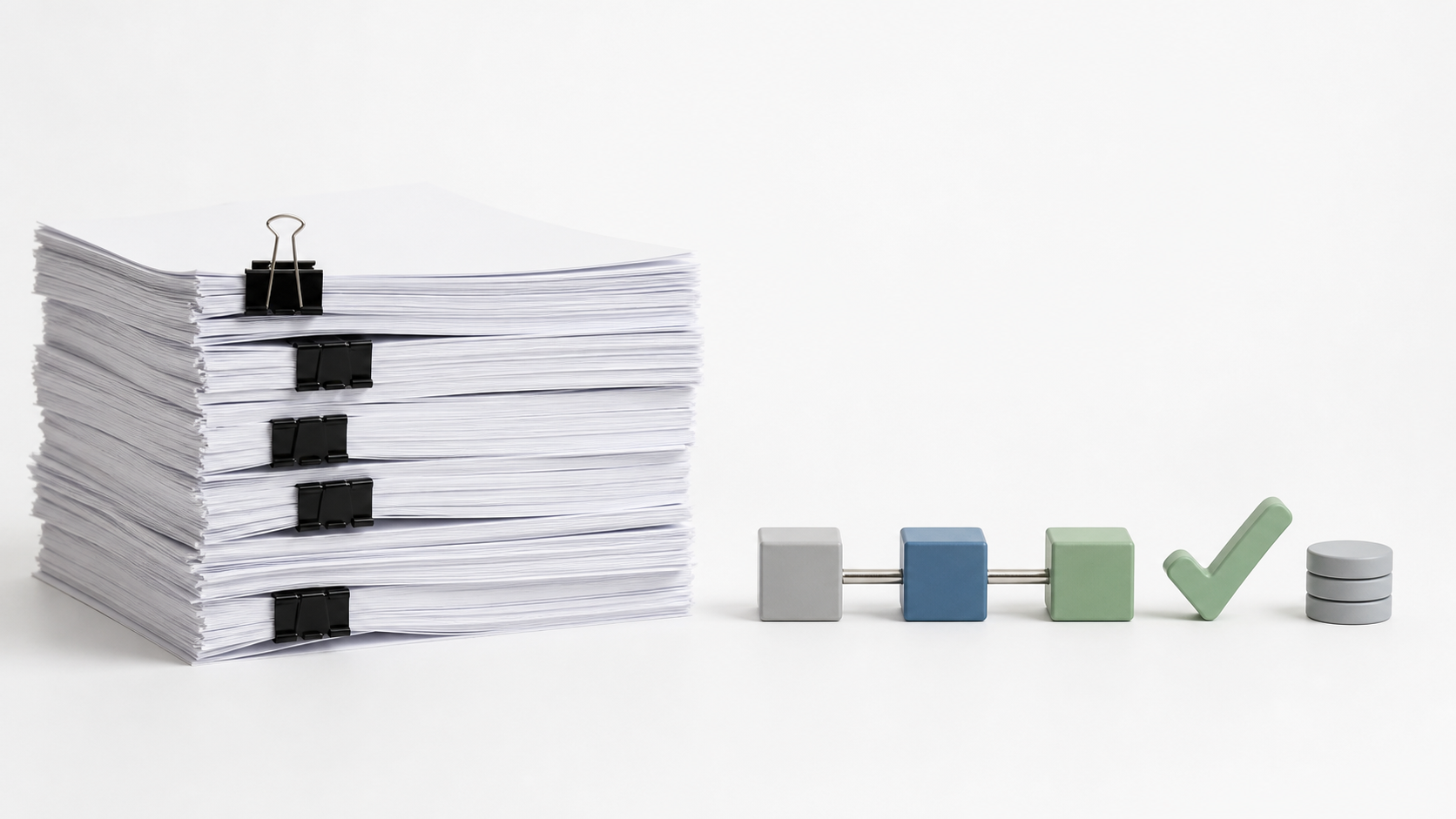
Most delays come from a few recurring patterns:
- Unstructured intent: requirements are scattered across meetings, emails, SOPs, screenshots, and informal conversations.
- Document-driven approval: stakeholders approve words, then react differently when they see a working experience.
- Late validation: usability and workflow gaps appear after too much time has already been invested.
- One-off delivery: every new app is treated as a fresh build instead of reusing patterns, checklists, and standards.
- Go-live as an afterthought: deployment, access, support, and operational readiness are handled too late.
The AIDRAD answer: compress the waste, not the discipline
Practical toolchain preview
The AIDRAD idea becomes real only when the stages map to tools people can actually use. A practical starter stack can look like this:
- Copilot Pro or Microsoft 365 Copilot for turning meeting transcripts, SOPs, and email threads into structured intent.
- Google AI App Studio or app-builder style tools for quickly shaping a clickable prototype or design direction.
- Codex for converting validated intent into code, scripts, refactors, API wiring, and deployment helpers.
- Docker and repeatable deployment scripts for moving beyond a demo into something that can be run and maintained.
Not every post in this series will cover the full stack, but each one should expose one part of the toolchain so the framework stays practical instead of purely conceptual.
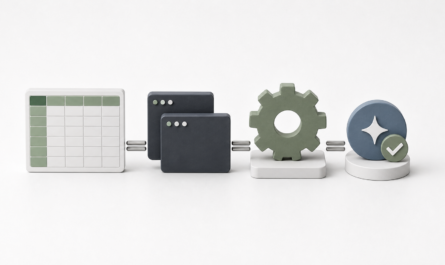
AIDRAD changes the delivery flow. It starts by structuring intent from real business inputs. It then moves quickly into a working demo so stakeholders can validate behavior instead of only reviewing documents. Once the workflow is clear, the solution is hardened through backend logic, integrations, validation, access control, and go-live readiness.
This is why internal applications can move from months to weeks in many cases. AI helps synthesize, draft, prototype, refactor, and accelerate implementation. But the operating model decides where AI fits, what humans approve, and when the work is ready for production.
What leaders should expect from a modern internal app process
A modern delivery process should produce visible progress early. It should make tradeoffs clear. It should make assumptions testable. It should create reusable assets after every delivery. It should also make it harder to confuse a demo with a production-ready application.
For me, that is the real promise of AI-driven internal delivery: not a magic tool, but a better rhythm. Less waiting for interpretation. More visible validation. Less late rework. More reusable delivery discipline.
Where this series goes next
This post opens the AIDRAD series. The next step is to explain why AI-driven delivery has to be treated as an operating model, not as a tool selection exercise. The tool matters, but the system around the tool matters more.
If internal applications still take months by default, it is worth asking whether the bottleneck is technical complexity or an outdated delivery model. In many cases, the delivery model is the bigger constraint.
Related reading
- Safely giving AI access to homelab secrets with Bitwarden and MCP
- Generate meeting minutes and action items with Copilot
- Locally hosting a Google AI App Studio app with Docker